|
||||


 |
Interests from bees to Balkans are history professor's passions By
Ryan White
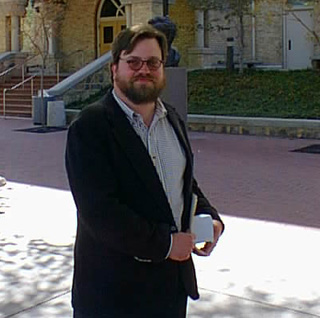
Peter Mentzel, outside Old Main on the USU campus, researches the history of Turkey and southeast Europe. Speaking German, Turkish, Serbian and Croatian, and understanding French, come in handy. / Photo by the department of journalism and communication. What do 100,000 honeybees, Turkish history, architectural restoration and classical music have in common? They are the stuff of Peter Mentzel's life. Mentzel, a history professor at Utah State University, was born in New York City. When he was young, his family moved to a farm in western Connecticut. He took care of the chickens; 50 chicks needed to be feed, watered and treated for diseases every day. When it was time to have chicken for dinner, he was in charge of slaughtering. In his years of keeping thousands upon thousands of honeybees, he has been stung once or twice. It's important to know the ways of the bee. "Working on the farm was hard work and time consuming, but I loved [it]," Mentzel said. While he was growing up in western Connecticut, his parents converted to the Jehovah's Witness religion. Holidays such as Christmas and Thanksgiving were not celebrated. Mentzel has always read the Bible and is still interested in reading it. Although Mentzel doesn't belong to a specific church today, he remains interested in the subject of religion. Growing up, Mentzel always had a love for history, although in college he started out as biology major, in pursuit of a career in the medical field. He changed to philosophy before finally engaging in his longtime interest in history. Peter Sugar, a professor at the University of Washington, inspired Mentzel to pursue his teaching career in history. Sugar, who died a few years ago, was knowledgeable and upbeat. "My style of teaching originates with Dr. Sugar," Mentzel said. Mentzel received his master's degree and also his Ph.D. in history from the University of Washington. After that he was a professor's assistant for one year before coming to Utah State in 1995. Mentzel did a dissertation on the Ottoman Empire and its labor movement. He did research for his dissertation in London, Vienna and Istanbul, spending four months in each place. He has been back to those places several times. He spent hours on end in interviews and studying the ways of the people of southeastern Europe and Asia Minor. He also did studies in Washington D.C., and in Potsdam, Germany. Mentzel speaks German, Turkish, Serbian and Croatian, and understands French, which was his research language. Mentzel is an expert in Turkish history. If you ask him, he'll tell you he is still trying to become an expert in Turkish history. USU doesn't have a specific emphasis in Turkish history, so he keys on the Balkans in southeast Europe. Mentzel has done many projects in southeast Europe. In his classes, he demonstrates interest in what his students discuss. He knows the names of all of all students, referring to them as Mr. or Miss and then the last name. He talks in front of the class while using his hands extending away from his body to describe the Turkish people, Islam and pan-Arab issues. "I love his vocabulary, and I love the way that he teaches his classes," Melanie Randall, a Utah State University history major, said. Randall says that she enjoys the short papers that Mentzel requires students to complete for assignments. Class discussions are from the readings in their textbooks. Mentzel is open for the students to ask questions. His favorite part of history is the self-identity of countries and their social history. In Menztel's office, there is a bookshelf that is the length of his 12-foot wall covered with books. On his computer plays the music that he loves to hear, classical. He loves to listen to Beethoven and Gustav Mahler or whoever is playing. Mentzel is the proud owner of a 1916 home in Cache Valley. Why did he choose an older home? "I love architecture, and to restore our house," Mentzel said. Both he and his wife enjoy the restoration of old architecture. The Mentzels have been married for 10 years. They have two dogs, three cats and approximately 100,000 honeybees. Why 100,000 honeybees? Mentzel is a beekeeper. He says that he learns every day about the hobby of beekeeping. He subscribes to the journal Bee Culture, and has read several books on the matter of beekeeping. He is also one of the founding members of a beekeeping organization in Cache Valley. "Beekeeping is a physical interest that I have. I have been doing my own beekeeping for about four years now," Mentzel said. Honeybees are not predators. Mentzel recalls being stung only one or two times in his stint with honeybees. "You do have to limit motions and move quietly so that the bees don't get alarmed," Mentzel said. He said he learned the art of beekeeping from a professor who had about 100 beehives. He worked for this professor, looking after his bees and hives. The honey that Mentzel gets out of the bee hives goes to his neighbors, but he and his wife do keep some for themselves. Aside from beekeeping, Mentzel enjoys cross-country skiing and hiking.
Mentzel says that it is a good thing he and his wife moved to Cache
Valley so that he can do those things he loves to do. |
Archived Months:
January
1999 January
2000 |
||